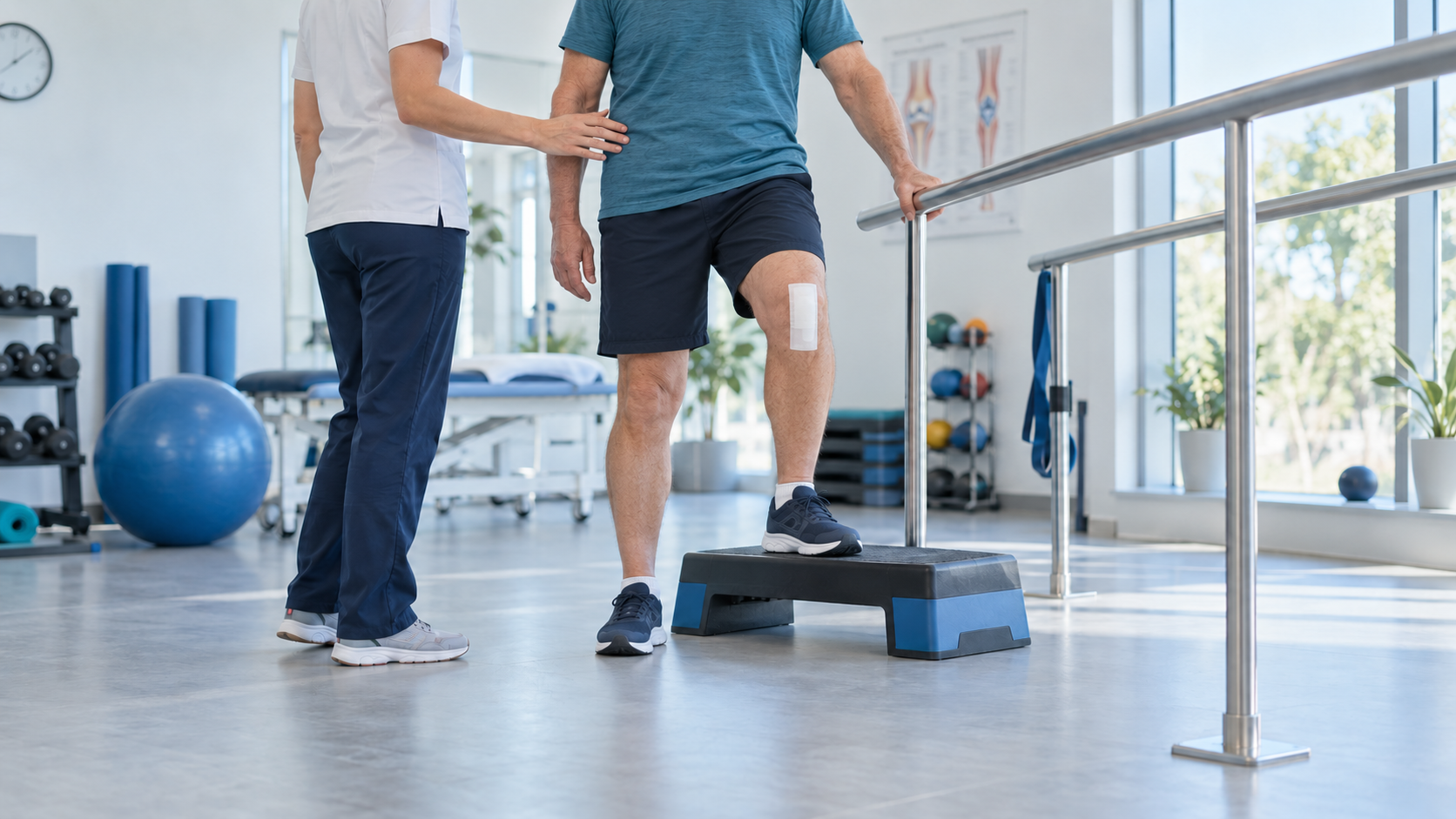
How long does it take to recover from a knee replacement?
Most people walk with an aid within a day of surgery, go home within one to three days, and manage most daily activities by six to twelve weeks. Strength, movement and swelling continue to improve for a year or longer. Knee recovery is generally slower than hip recovery, and the first two weeks are the hardest part.
Can I put my full weight on the leg after a knee replacement?
Yes. Full weight goes through the leg as soon as you are judged safe, on the day of surgery or the day after. There is no partial weight-bearing phase, and walking as normally as comfort allows helps the knee rather than harming it.
Why is it so important to get the knee fully straight?
A knee that does not straighten fully makes the thigh muscle work continuously when you stand, which is tiring and painful, and it produces a limp that becomes hard to correct. Full extension in the first two weeks is much easier to achieve than to recover later. Rest with the leg out straight and put any pillow under the ankle, never under the knee.
How much should my knee bend after a knee replacement?
Bending improves over weeks. Most people reach around a right angle by two to three weeks and are comfortably past it by six weeks, with the range still improving at three months. For context, walking needs roughly 65 degrees, stairs around 90, rising from a low chair around 105, and a full bicycle pedal revolution around 110.
How long will I need crutches after a knee replacement?
Two crutches usually become one, then a single stick, across the first two to six weeks, with most people walking free after that. Give up an aid when your walking stays level and safe without it, not because a particular week has arrived.
How painful is knee replacement recovery?
The first two to three weeks can be very painful, and this is expected. Do not try to be brave by avoiding prescribed pain relief: take it regularly and as directed, particularly before your exercises. Keeping the knee moving little and often is important because a painful knee that is not moved can become very stiff and harder to move later. Do not force the knee through severe or lasting pain. Pain that steadily worsens rather than gradually settling should be assessed.
Is it normal for my knee and ankle to swell after a knee replacement?
Yes. The knee often stays warm and swollen for three to six months, and the calf, ankle and foot swell too. It typically worsens through the day and settles overnight. Elevating the leg with the ankle supported and continuing ankle pumps both help. Sudden or one-sided calf swelling with pain or tenderness should be reported promptly, because it can indicate a blood clot.
Can I shower after a knee replacement, and when can I have a bath?
Showering is fine as long as the dressing is covered and stays dry underneath. Leave the dressing alone unless it soaks through. No baths, and no soaking the dressing, until the wound review at two to three weeks, when it is changed.
How long do I take blood thinners after a knee replacement?
My standard protocol is aspirin for two weeks, which is one of the options NICE recommends for elective knee replacement. If you already take an anticoagulant, that is restarted 24 to 48 hours after surgery instead, provided there is no sign of bleeding and the wound dressing is reasonably dry.
When can I drive after a knee replacement?
When you can get into the car comfortably, work the pedals normally, brake hard without hesitating, are off sedating painkillers, and your insurer is content. Around six weeks is typical. A right knee generally takes longer than a left knee in an automatic, because the right leg does the emergency stop. A routine knee replacement does not require you to notify the DVLA unless your doctor says so, or you still cannot drive at three months.
When can I kneel after a knee replacement?
Kneeling is not harmful once the wound has fully healed, but it is often uncomfortable, and some people never regain comfortable kneeling. The numb patch of skin beside the scar is part of the reason. A kneeling pad and leading with the other knee both help.
When can I return to work after a knee replacement?
Desk work is manageable for some people at four to six weeks, particularly with a phased return. Standing all day, kneeling, squatting, ladders, rough ground or heavy manual work usually mean longer, and three months or more is common.
Why is my knee still stiff and swollen months after surgery?
Prolonged swelling and stiffness are common after knee replacement and usually improve gradually over the first year. They are worth reporting rather than enduring, particularly if movement is going backwards. BOA and BASK standards recognise that 10 to 20 in every 100 patients report pain, stiffness or dissatisfaction, and recommend systematic consultant-led assessment rather than acceptance.
When will I be seen after my knee replacement?
Twice as routine, both in my clinic: a wound review at two to three weeks, and an appointment at eight weeks to go through pain, movement, walking, strength and what you have got back to. If something is troubling you in between, ring rather than saving it for the appointment.