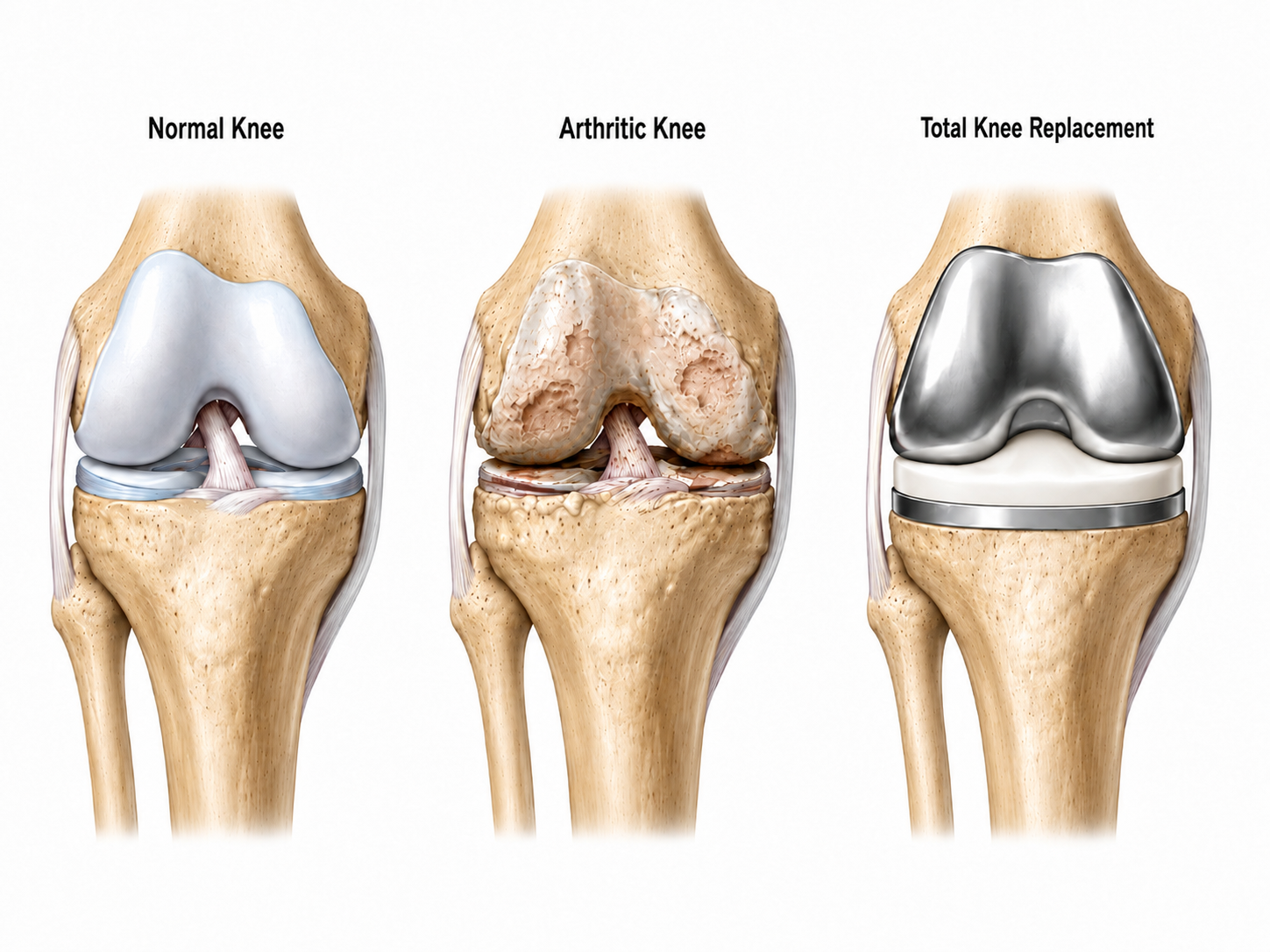
Non-surgical treatment can remain worthwhile whether you are avoiding surgery, waiting for surgery or preparing for it. A combined plan is usually more effective than relying on a single treatment.
Exercise and activity
Therapeutic exercise is a core treatment. NICE recommends exercise tailored to the individual, including local muscle strengthening and general aerobic fitness. Symptoms may temporarily worsen at the start of exercise, but regular, long-term exercise can reduce pain and improve function. Supervised exercise can be considered if useful.
Weight management
If you are living with overweight or obesity, weight loss can reduce pain and improve physical function and quality of life. NICE advises that any weight loss can help and that, where achievable, losing around 10% of body weight is likely to give more benefit than losing 5%.
Medicines, injections and walking aids
- A topical anti-inflammatory medicine (NSAID) is recommended for knee osteoarthritis when medication is needed.
- If topical treatment is ineffective or unsuitable, an oral NSAID may be considered after reviewing stomach, kidney, liver and cardiovascular risks; gastroprotection is usually needed alongside it.
- Paracetamol and weak opioids are not routinely recommended, except for infrequent short-term use when other options are unsuitable or ineffective. Strong opioids are not recommended for osteoarthritis.
- A corticosteroid injection can be considered for short-term relief when other medicines are ineffective or unsuitable, or to support exercise. NICE advises explaining that the benefit is usually short-term, around 2–10 weeks.
- A walking stick or other walking aid can improve confidence and function for some people.
Treatments not routinely recommended
NICE does not recommend hyaluronan injections, glucosamine, strong opioids, acupuncture or dry needling, or arthroscopic lavage and debridement for osteoarthritis. However, some patients have reported symptom improvement after hyaluronan injections, although evidence remains evolving. Braces, insoles, tape or supports are not routinely advised unless there is a specific biomechanical or stability problem and an aid is likely to improve function.
If you decide to wait
Knee osteoarthritis is not usually dangerous. Symptoms may stay similar, fluctuate or worsen. Continue the agreed exercise and symptom-control plan, and ask for reassessment if pain, sleep, walking, deformity, or independence change. Non-surgical measures can relieve symptoms and delay surgery, but they do not reverse established joint damage. Choosing not to have surgery is a valid decision.