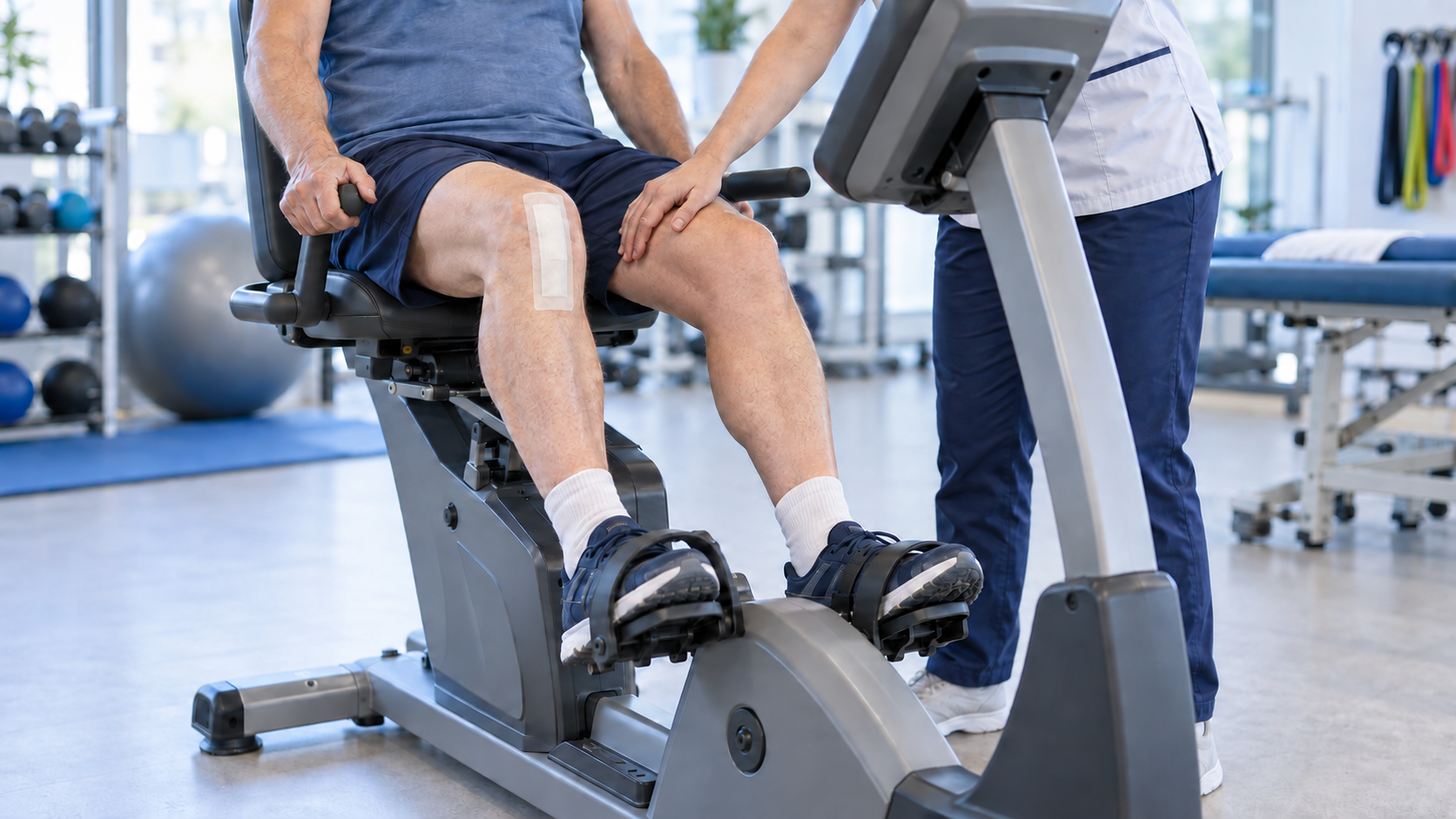
How long does it take to recover from a partial knee replacement?
Most people walk with crutches within hours of surgery and go home after two to three days or sooner. The walking aid comes off when you feel steady without it, indoors first. Driving is usually around five to six weeks, work generally after the eight-week review, and ordinary daily life is largely back by around three months, with strength and stamina still improving over the first year. Recovery is generally quicker than after a total knee replacement.
Is recovery from a partial knee replacement really easier than from a total?
Yes, for most people. Only one compartment is resurfaced, much less bone is removed, the kneecap is left alone and both cruciate ligaments are kept, so there is less pain, less swelling, a shorter stay and an earlier return to normal activity. It is still a joint replacement, and the exercises and precautions still apply.
Can I put my full weight on the leg straight away?
Yes. Once the team is satisfied you are steady, which is usually within hours, the whole leg takes your weight. Nothing is held back or protected, and walking as close to normally as comfort permits does the knee good rather than putting the implant at risk.
How long will I be in hospital?
My average inpatient stay is two to three days, and it is frequently shorter after a partial knee replacement than after a total one. I do not do this as day-case surgery. You go home once you are walking safely, comfortable on tablets, medically stable and with a settled wound — not on a fixed night.
How much will my knee bend after a partial knee replacement?
Because the ligaments and the kneecap joint are undisturbed, the bend usually returns faster and further than after a total replacement, often past a right angle within two to three weeks and close to your pre-arthritis range by six weeks. Many people bend better than they did in the year before surgery.
Why does straightening matter so much?
If the knee will not lie flat, your thigh muscle is left holding you up every time you stand. That is exhausting, sore, and it shows as a limp that takes months to unpick. Keeping full extension during the first fortnight is far simpler than clawing it back later. Sit and lie with the leg extended, and support any pillow under the ankle rather than behind the joint.
How long will I need crutches or a stick?
I do not put a time on it. The aid exists so that your rehabilitation is safe, and you stop using it when you feel you can manage without it. Stop indoors first, where the ground is level and the distances are short, and keep it for outdoors and uneven ground until you feel steady there too. The test is whether your walking stays level and controlled without it.
How painful is it?
For most people it is milder than a total knee replacement, and the first week is the worst of it. Control comes from combining a few different medicines, not from leaning on opioids. Pain that rises and falls with what you have been doing is normal; pain on a steady upward march needs reviewing.
How long does the swelling last?
Usually six to twelve weeks, rather than the three to six months that often follows a total knee replacement. Evenings are the worst of it and a night lying flat helps. Raising the leg on a support under the ankle, and keeping the ankle pumps going, both make a difference. Calf swelling, pain or tenderness that is sudden or confined to one leg should be reported the same day.
When can I shower or have a bath?
Showering is fine from the start if you cover the dressing and it remains dry beneath. Otherwise do not touch it, unless it has soaked through. Avoid baths and anything else that would soak it until your two to three week review, at which point it is removed.
How long do I take blood thinners?
My standard protocol is aspirin for two weeks, one of the options NICE recommends for elective knee replacement. If you already take an anticoagulant, that is restarted 24 to 48 hours after surgery instead, provided there is no sign of bleeding and the wound dressing is reasonably dry.
When can I fly or travel long distances?
I advise against long-haul flights and long surface journeys for eight weeks after a partial knee replacement. Please bring any travel plans to your consultation beforehand, because some conditions and medications increase the risk of clots in the leg on their own, and we can go through yours and plan around them.
When can I drive after a partial knee replacement?
I expect most people to be driving at around five to six weeks, occasionally a week earlier if every test is met. What counts is capability rather than the date: getting in without difficulty, using the pedals normally, stamping on the brake without pausing, being off sedating painkillers, and having an insurer who is satisfied. An operated right knee generally lags behind a left one in an automatic. Being cleared to drive covers short, undemanding journeys first: a rush-hour commute or a long-distance drive asks considerably more of the knee, so build up distance and traffic gradually and break longer trips to stand and straighten the leg. Straightforward knee replacement surgery carries no DVLA notification duty of its own, unless your doctor advises otherwise or you remain unable to drive three months on.
Can I kneel after a partial knee replacement?
Usually more comfortably than after a total knee replacement, once the wound has fully healed. The scar and the numb patch beside it can stay tender for some months, and a kneeling pad helps.
When can I go back to work?
Usually after your eight-week review, when we can match the knee to what the job demands. Desk-based work is the exception and can start earlier if you are comfortable and able to move about regularly. I advise a phased return in either case, and one that does not involve long periods of driving.
Could I still need a total knee replacement later?
It is possible. Registries record a higher revision rate for partial than for total knee replacement, partly because converting a partial to a total is a smaller operation and is therefore offered more readily. Arthritis can also progress in the compartments that were not replaced. New or persistent pain, particularly on the outer side or at the front of the knee, should be assessed rather than tolerated.
When will I be seen after my operation?
Two routine appointments, both with me: the wound is reviewed at two to three weeks, and there is a fuller consultation at eight weeks about pain, movement, gait, strength and the activities you have resumed. Anything that worries you in the meantime warrants a phone call rather than a wait.